

The Gateway of India in Mumbai is a waterfront monument at Apollo Bunder, at the end of Chhatrapati Shivaji Marg in South Mumbai. Its Indo-Saracenic arch commemorates a royal landing, and the waterfront setting also serves as a departure point for passenger boat routes.
- Location: Apollo Bunder, overlooking the Arabian Sea.
- Opening pattern: The Gateway is open “Throughout the day.”
- Getting there from Strand Hotel Colaba: About an 11-minute walk.
- Boat routes: Gateway–Elephanta and Gateway–Mandwa are operational passenger water routes.
How do you get to the Gateway of India?
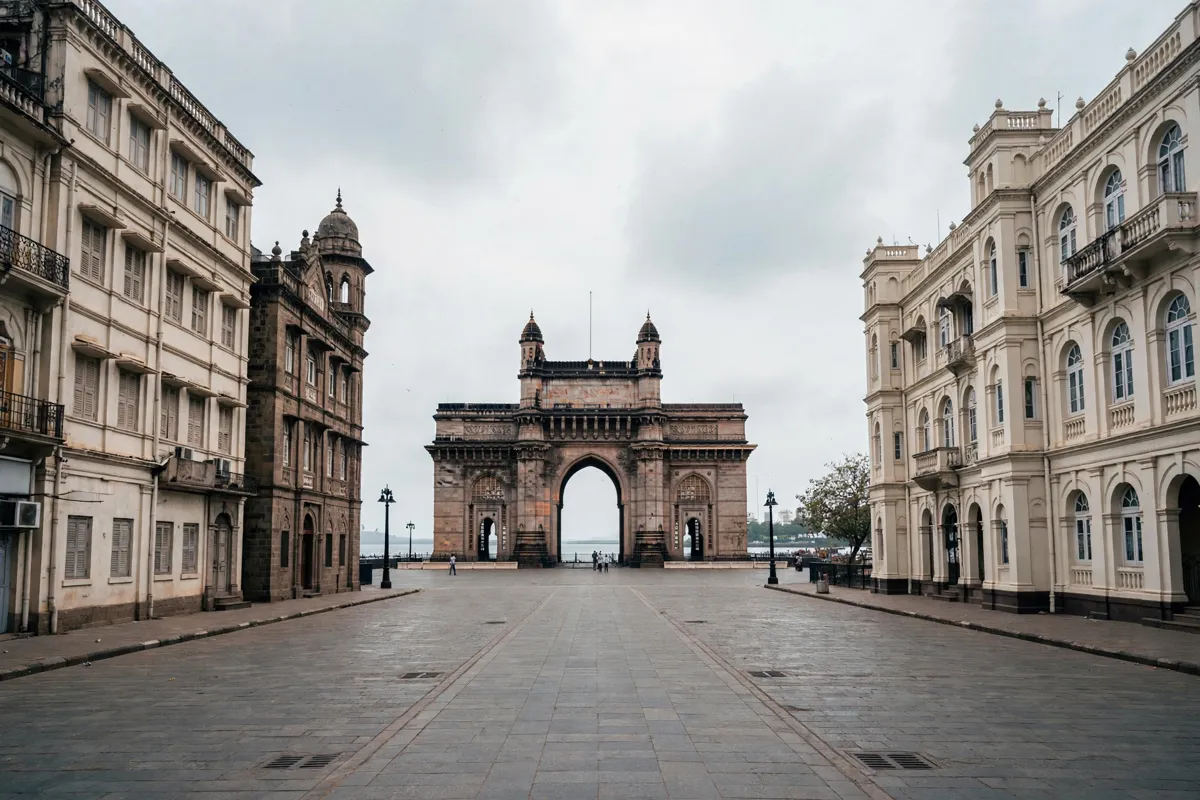
The Gateway stands at the seafront end of Chhatrapati Shivaji Marg, in the Apollo Bunder area of South Mumbai. From Strand Hotel Colaba, a hotel near the Gateway of India, it is about an 11-minute walk.
If you are arriving by rail, Chhatrapati Shivaji Terminus is a major Mumbai station; local transport can take you onward to the Gateway. Passenger boats also depart from the waterfront for Elephanta and Mandwa, so check the relevant operator’s arrangements if you plan to continue by water.
For a longer route through the area, you can connect the monument with a Colaba walking route to nearby South Mumbai sights.
What can you see at the waterfront?
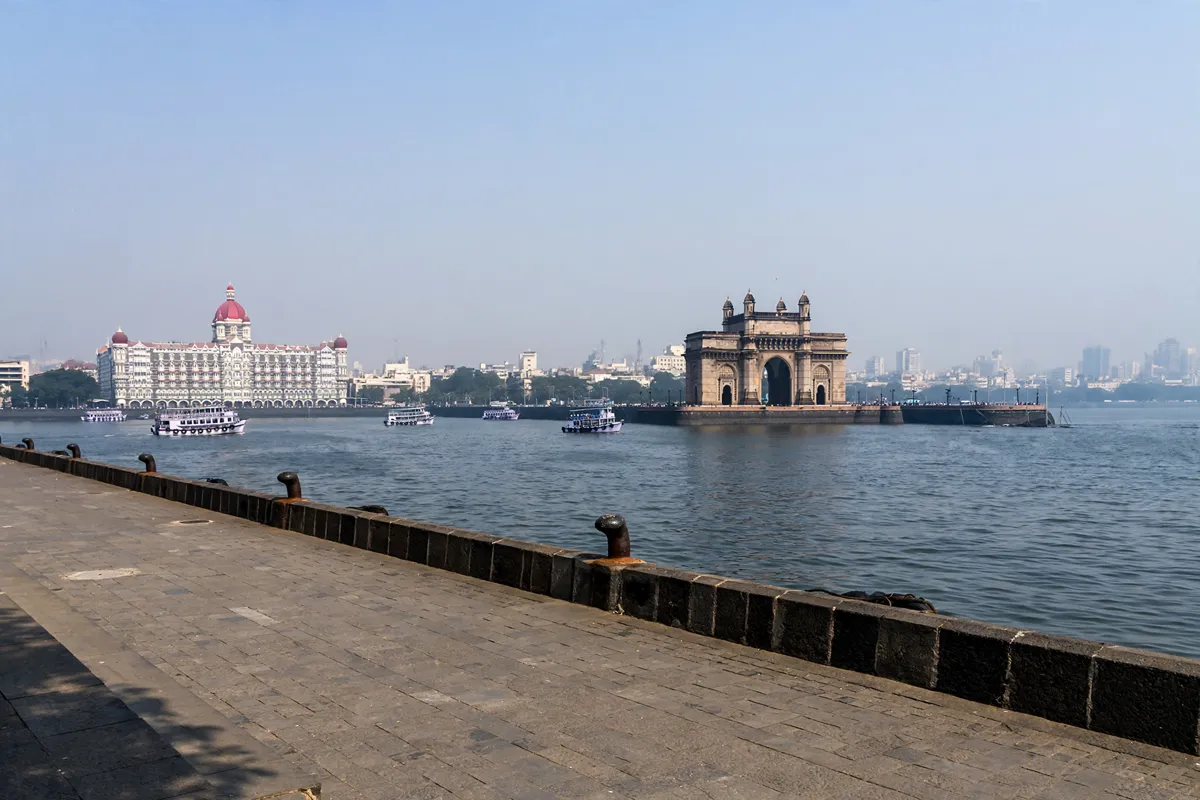
The main landmark is the stone arch facing Mumbai Harbour and the Arabian Sea. The open waterfront gives you a view of the monument in its harbour setting, while the Gateway also marks the departure point for passenger services to Elephanta and Mandwa.
Treat the boat journey as a separate outing from seeing the monument itself: schedules, availability and fares can depend on the service and operating conditions.
What is the Gateway of India’s history and architecture?
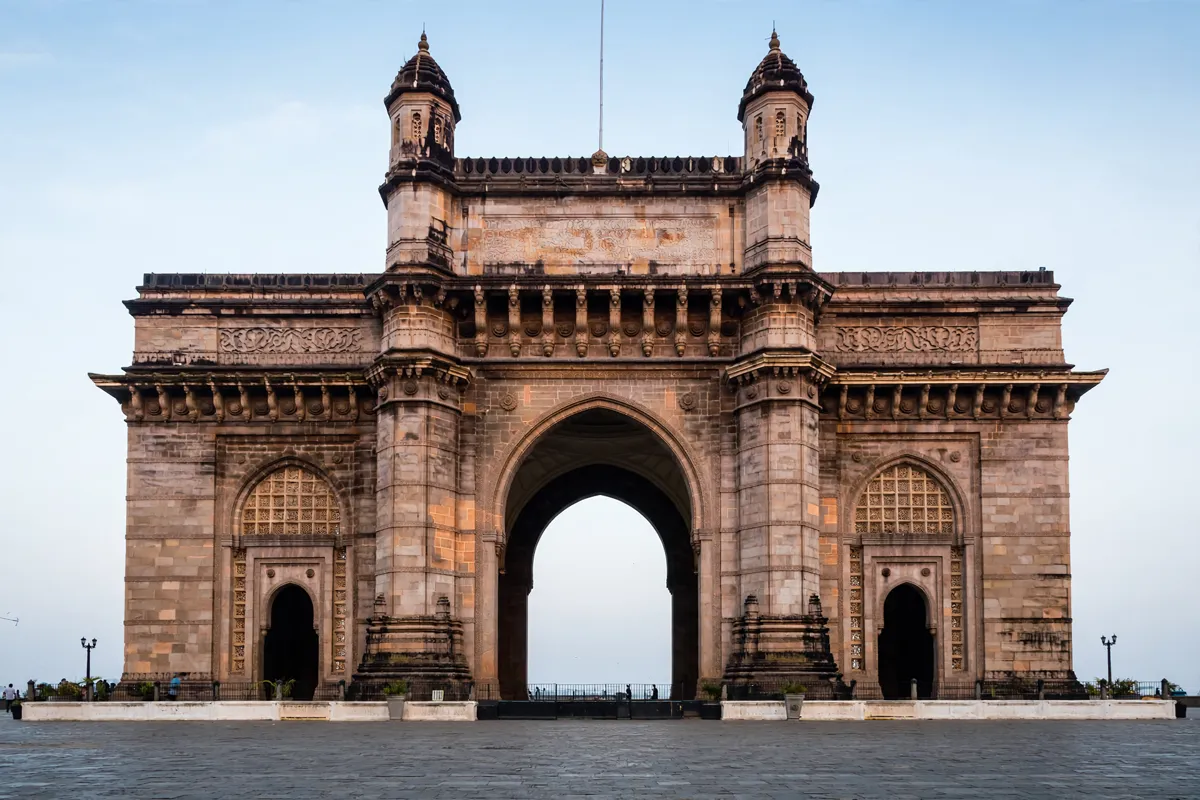
The Gateway of India commemorates King George V and Queen Mary’s landing at Apollo Bunder during their visit to India in 1911. The monument later served as a ceremonial entrance for Viceroys and Bombay’s new Governors.
Architect George Wittet designed the 26-metre basalt arch in the Indo-Saracenic style. According to the Mumbai City District Administration, the foundation stone was laid on 31 March 1911, the final design was approved in 1914, and construction was completed in 1924.
Those dates give the structure a clear timeline: its foundation followed the royal landing, the design was approved a few years later, and the completed arch became part of the city’s waterfront.
Which nearby sights can you combine with a visit?
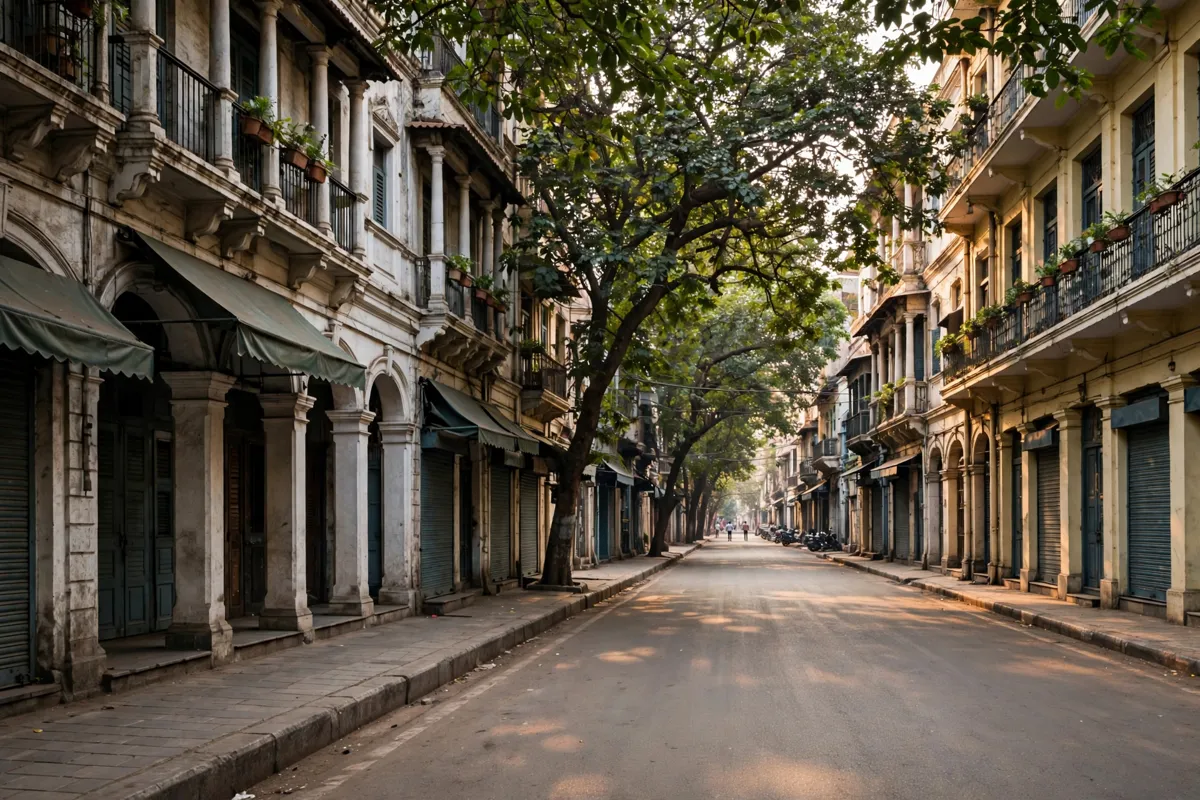
The area around the Gateway gives you a starting point for a South Mumbai day on foot. Chhatrapati Shivaji Maharaj Vastu Sangrahalaya and Jehangir Art Gallery are among the nearby cultural stops; you can plan them into a route that continues through Colaba. For a broader itinerary, a South Mumbai route from Colaba can help you connect several sights.
The museum is a nearby cultural stop that can fit naturally into a day around the Gateway.
If you want to make the museum part of your day, use this visitor guide to Chhatrapati Shivaji Maharaj Vastu Sangrahalaya to plan that stop.
What should you know before planning your visit?
The Gateway’s opening time is “Throughout the day.” The monument’s open access and the separate boat services are different parts of a visit, so check the ferry operator’s details if you are travelling to Elephanta or Mandwa.
The Gateway–Elephanta wooden-launch service has departures at 9:00 am and returns by 3:30 pm, a return fare of ₹160, and closure on Monday; service depends on passenger availability.
The Gateway–Mandwa wooden-launch service has a 1.5-hour trip time, service hours of 6:00 am–6:00 pm and a ₹95 fare, with a monsoon closure. The listed operator is the Gateway–Elephanta water transport society.
Boat operations and their terms can change, so check the official site before you go. For ferry details, consult the Maharashtra Maritime Board or the named service operator.
FAQs
Where is the Gateway of India?
It stands at Apollo Bunder, at the end of Chhatrapati Shivaji Marg in South Mumbai, overlooking the Arabian Sea.
What does the Gateway of India commemorate?
The monument commemorates King George V and Queen Mary’s landing at Apollo Bunder during their 1911 visit to India.
Can you take a boat from the Gateway of India?
Passenger water routes from the Gateway include services to Elephanta and Mandwa. Check the relevant operator for current schedules and conditions before setting out.